L.O.V.E.
A control room for a telescope that didn't exist yet
Shipped 2017 to 2021, redesigned with AI in 2026. It runs the Rubin Observatory.
Tools built for and with




L.O.V.E.
Shipped 2017 to 2021, redesigned with AI in 2026. It runs the Rubin Observatory.
ReCon
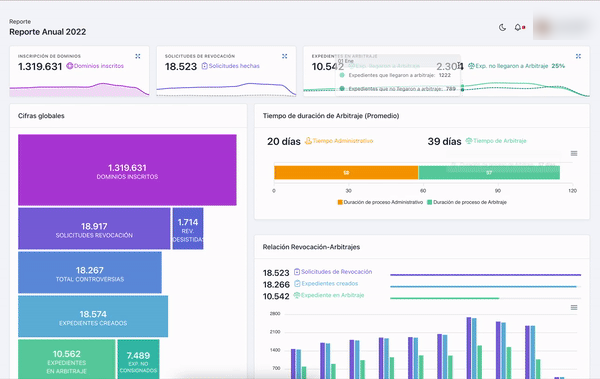
One tool instead of four systems. Over 90% less time to find a key indicator.
Cero Accidente
Shipped 2018 to 2019, rebuilt with AI in 2026. 45% more mines reached by the same team.
Helio-KNOW
Hackathon concept, 2024, built as a working prototype with AI in 2026. Three ways into one knowledge graph.
More shipped work, from bus control rooms to emissions monitoring: see all projects.
Observation, interviews and the system's documentation, until I can talk to experts on their terms.
Engineers and researchers join design sessions, so constraints surface early.
When a decision depends on data, I prototype in code and test it with the people who will use it.
Experts act on what they can question. Rankings, alerts and AI output show their reasons.
Tools for experts who decide with too much data, from telescope control rooms to mining inspections.
L.O.V.E.
Shipped 2017 to 2021, redesigned with AI in 2026. It runs the Rubin Observatory.
ReCon
One tool instead of four systems. Over 90% less time to find a key indicator.
Cero Accidente
Shipped 2018 to 2019, rebuilt with AI in 2026. 45% more mines reached by the same team.
Helio-KNOW
Hackathon concept, 2024, built as a working prototype with AI in 2026. Three ways into one knowledge graph.
A real-time map of the city's bus fleet for the crisis room: incidents, alerts and a history mode for recurring events.
One alarm view for 66 antennas and the buildings around them.
Monitoring of chemical emissions in the air, so facilities can manage how odors spread and comply with regulations.
Work / L.O.V.E.
I designed L.O.V.E., the interface that runs Rubin Observatory's control room, from 2017 to 2021. In 2026 I returned to it and rebuilt it with AI, building on what operators had told me since.
Designed with Rubin's scientists and engineers while the telescope was still being built.
Rubin photographs the whole southern sky every few nights, from a control room watching more than 65 systems. When work began there were no operators, no live data and few final requirements.
The stakes are high. Rubin's first priority is the safety of the people on the mountain and of one-of-a-kind, very expensive equipment, so operators need to see at once when something is wrong. And the telescope runs a ten-year survey: every night lost to a fault leaves a gap in the data the survey can't get back.
Older telescopes split monitoring across many tools. The bet: one environment, built from components operators compose themselves, so it could grow with a telescope that kept changing.
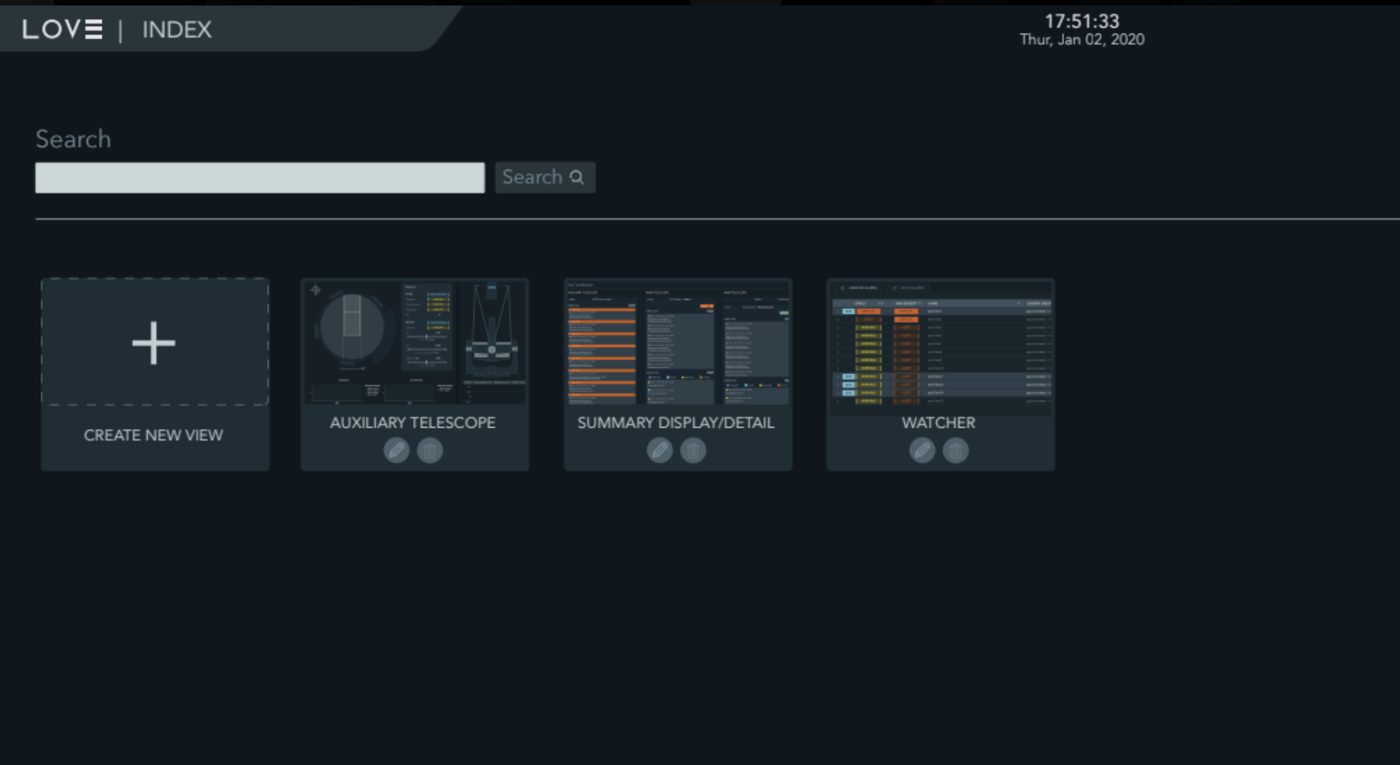
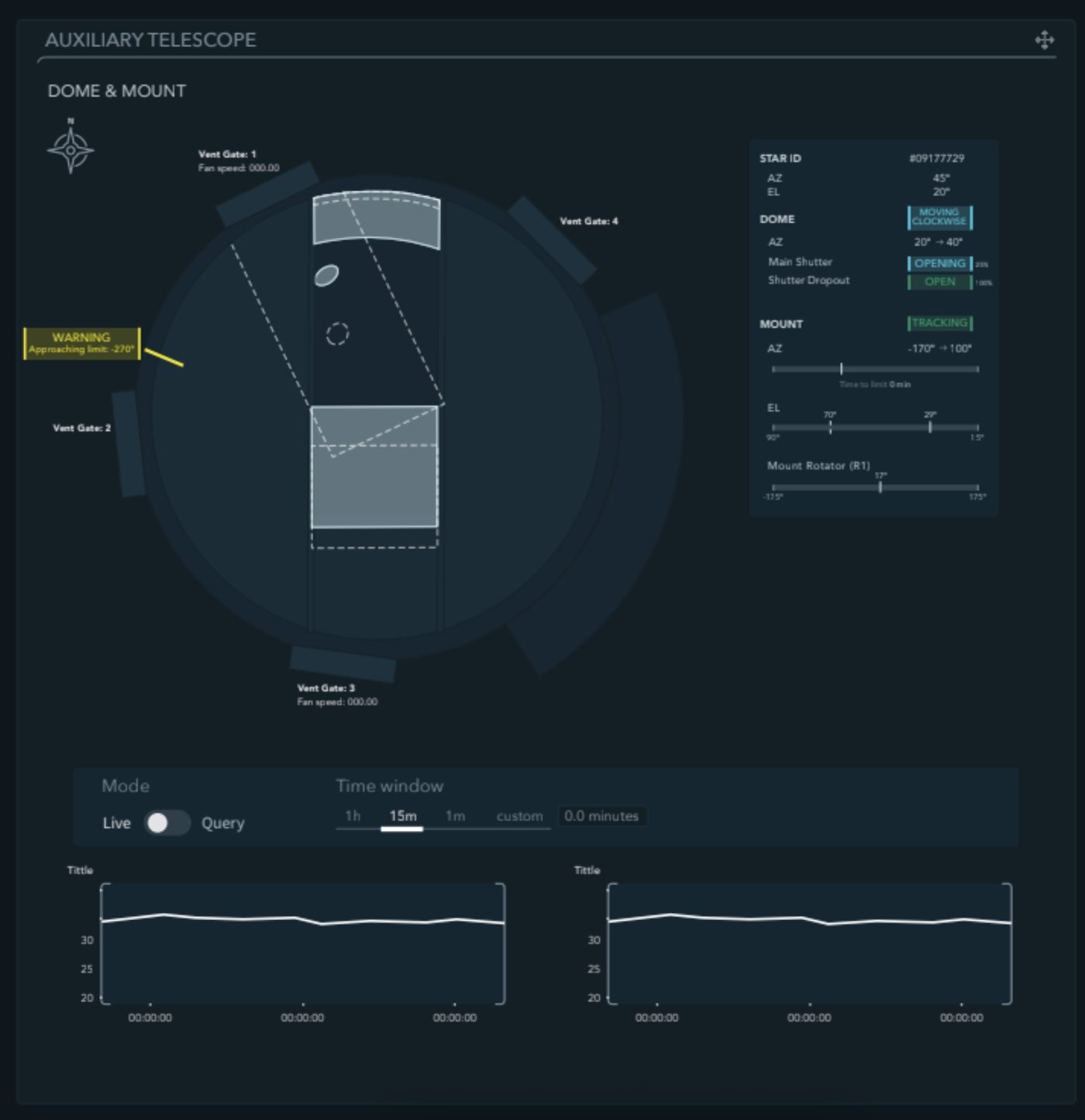
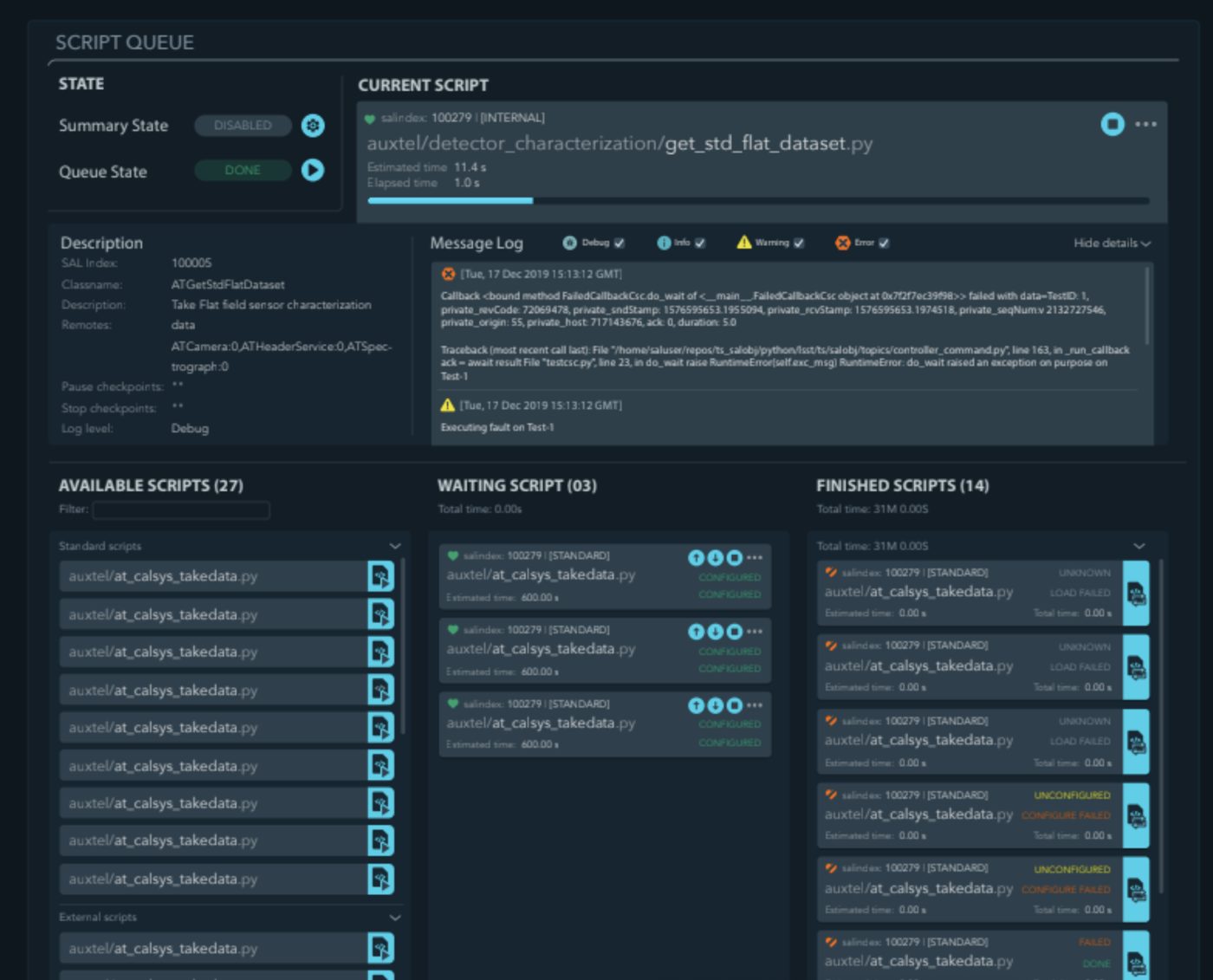
The original L.O.V.E., as shipped.
As operators came on board, some asked for terminal-like views of raw values, the way older tools worked. I made the case for visualizations with side-by-side examples of what each one showed at a glance.
Result: Operators were won over: they said it looked modern and agreed it made finding data much faster.
Requirements changed with every construction milestone. Instead of finished screens, I proposed components operators compose into their own views.
Result: Rubin's team still extends it on its own, five years later.
Beyond the interface, I proposed a model for the room itself: which displays are shared on the wall for the whole team and which stay personal. Everyone keeps the same picture of the observatory, while each person works on their own part of it.
Result: Adopted as proposed. It increased situational awareness across the room and made collaboration between operators easier.
There was no earlier control room to compare against. The evidence is that it shipped, is used every night, and keeps growing.
Listed in Rubin's operations documentation as its control and monitoring software.
494 commits since January 2025 in Rubin's public code repository.
The designer who took over kept my per-component method and scaled it.
A personal re-imagining, not an official Rubin release. All data is simulated.
L.O.V.E. kept growing, and operators' feedback pointed to four things it needed next:
The original already zoomed from the whole mirror down to each actuator, with color-blind operators in mind. The redesign keeps that zoom, lists what needs attention beside it, and uses a force scale that's even easier to tell apart.
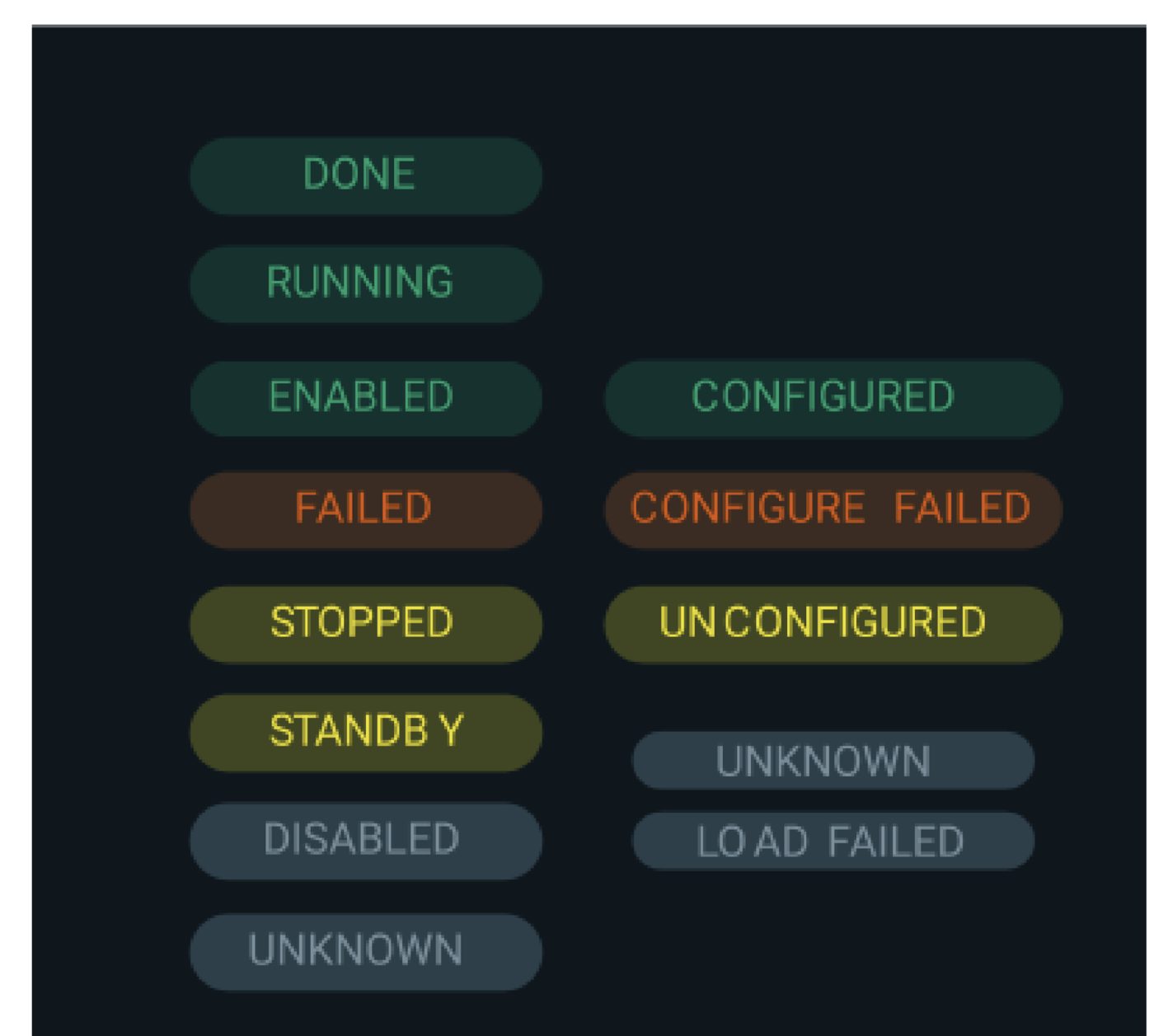
Standby is calm gray, yellow is kept for real attention, and fault is magenta-red, which stays distinct from green for color-blind readers.
The original's status vocabulary, now in one system where meaning never depends on color alone: every state has a tint, an icon shape and a label.
The original paired the dome view with a live camera. The redesign puts dome, mount and target on one plan, and makes commands that move hardware unmistakable.
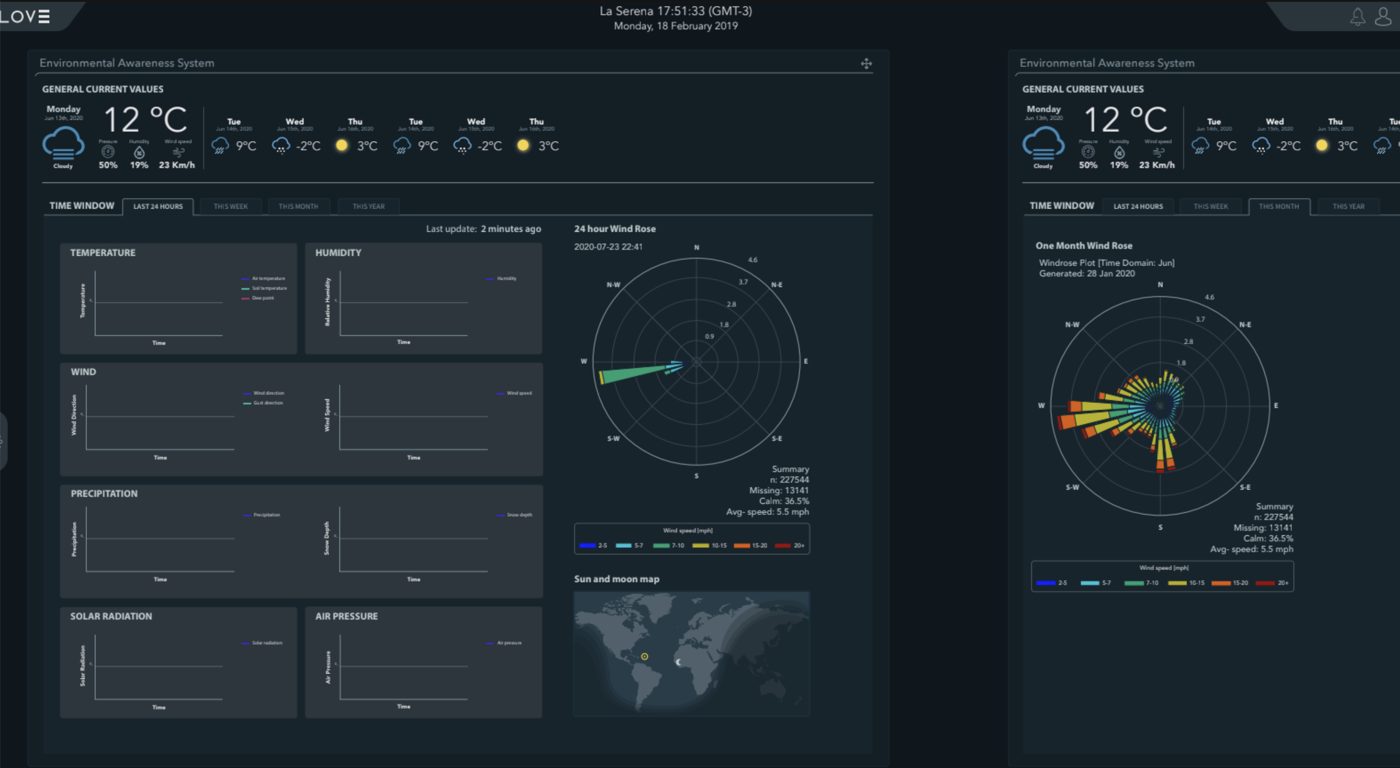
The original brought every weather reading into one place. The redesign answers the next question, whether it's safe to keep observing, with a verdict that names its reasons.
Operators wanted keyboard navigation from the start, but it was beyond the original's scope. The redesign adds a quick switcher (⌘ K), shortcuts to every view and pinned views, shown as ⌘ or Ctrl depending on the operating system. No single key ever moves hardware. Along the way I fixed the interaction bugs operators had reported.
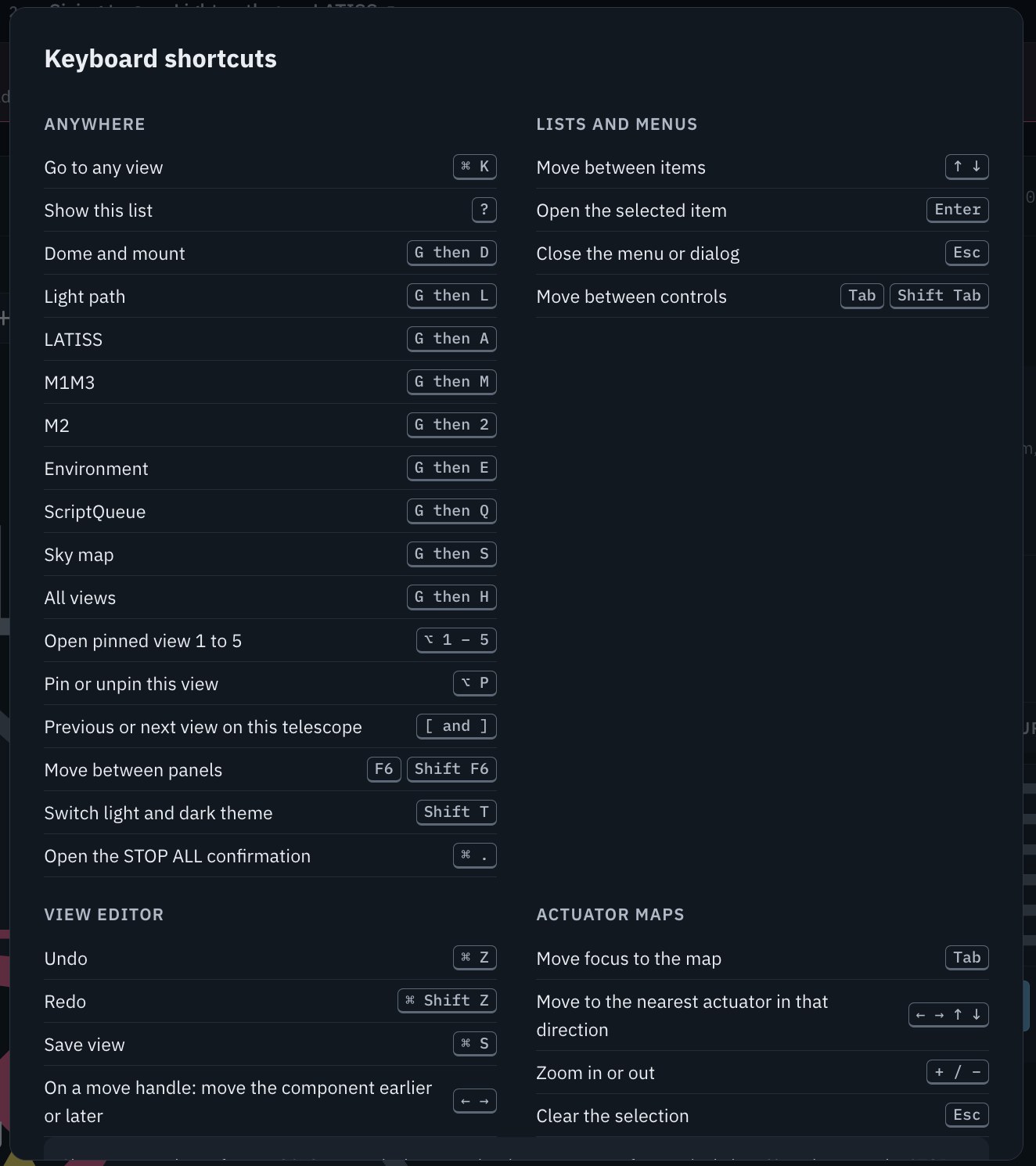
I directed; AI built, in under 24 hours. That was only possible because I'd spent four years on the original: the time went into decisions, not discovery.
The original's screens and video, interviews with four users, real dome data and Rubin's documentation.
9 views, including a new Scheduler, five guided scenarios, and a design system with both themes and 17 components.
Every design call, checked against the real system. Anything without real data is labeled illustrative.
Pick a scenario and watch the control room respond. No astronomy needed.
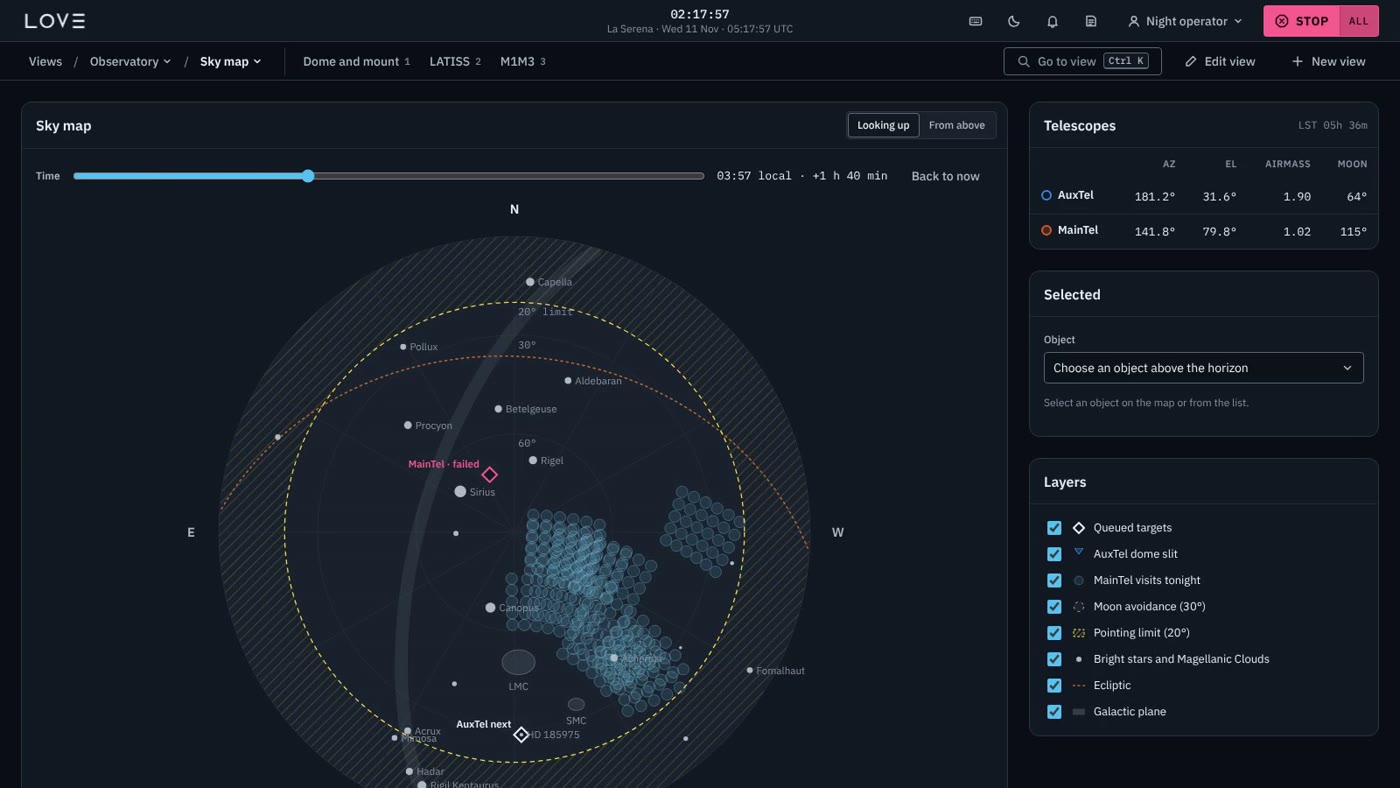
The per-component method kept the original moving with no users and no hardware. Building the redesign with AI let me test decisions in working code instead of static mockups.
I'd test with the people who run the telescope at night much earlier, even in simulation. The redesign's scenarios are a first step toward that.
Work / ReCon
Coordinators needed four systems and 5–10 minutes to answer one performance question. I designed one tool that answers it in a single view.
NIC Chile has run online arbitration for .cl domain disputes since 2014. Coordinators report performance to the board, but the data lived in four systems and a set of spreadsheets, and some of it had never been displayed at all.
The stakes are fairness. The center exists to resolve disputes fairly, and without visibility into how arbitrators and each stage were performing, cases could take too long, an unclear process could see a dispute decided in favor of the wrong party, and leadership couldn't make decisions quickly or accurately enough. Data is how the center keeps its process fair, and shows that it is.
The bet: if the tool followed the arbitration protocol coordinators already knew, rather than the databases it came from, they could answer board-level questions themselves, in one place.
Research sessions with coordinators, the information architecture, every chart decision, and the front end, built in code with the developer's UI kit.
Worked with: The Legal Director, the main coordinator and a legal assistant on the client side; a developer and a database engineer on ours.
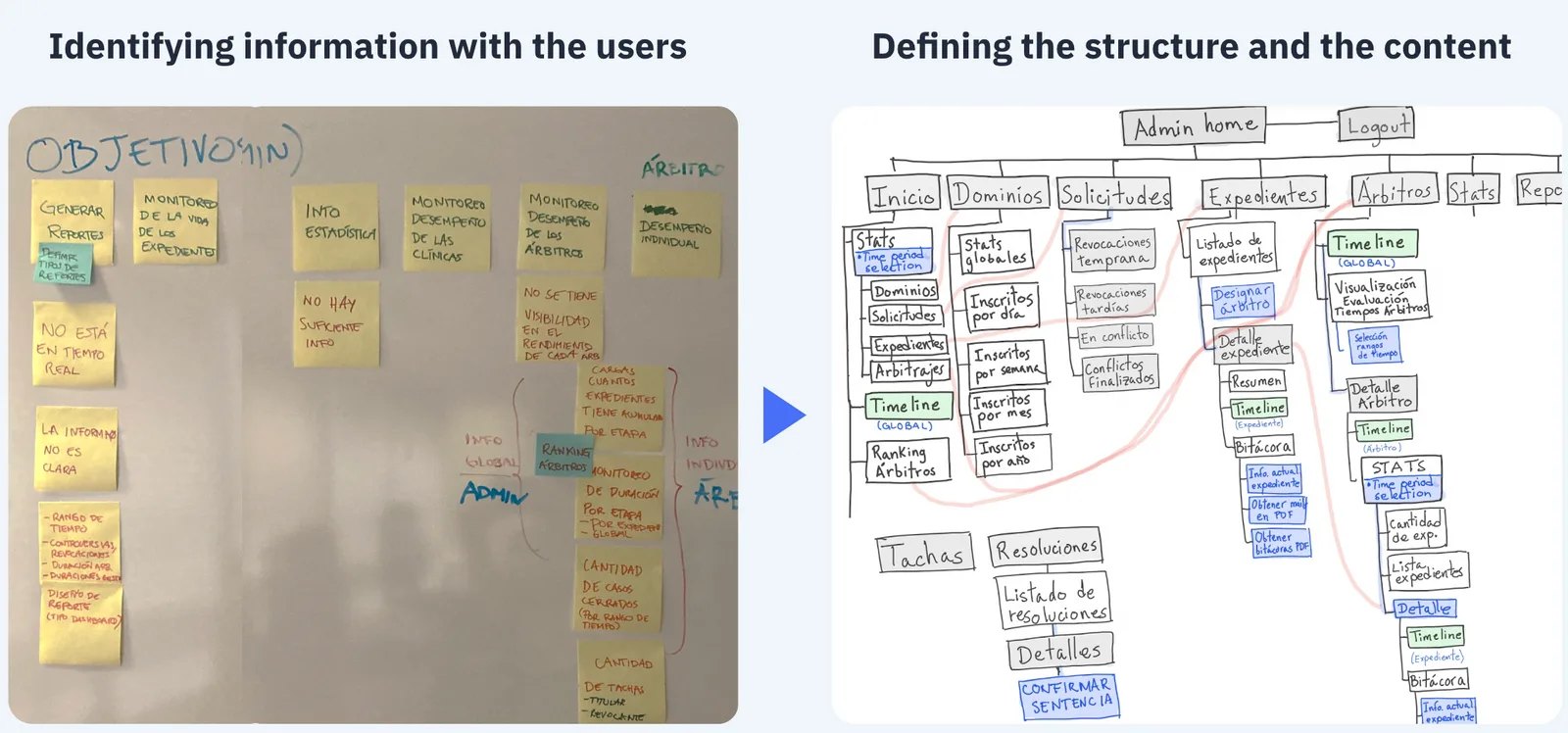
Three decisions shaped the tool.
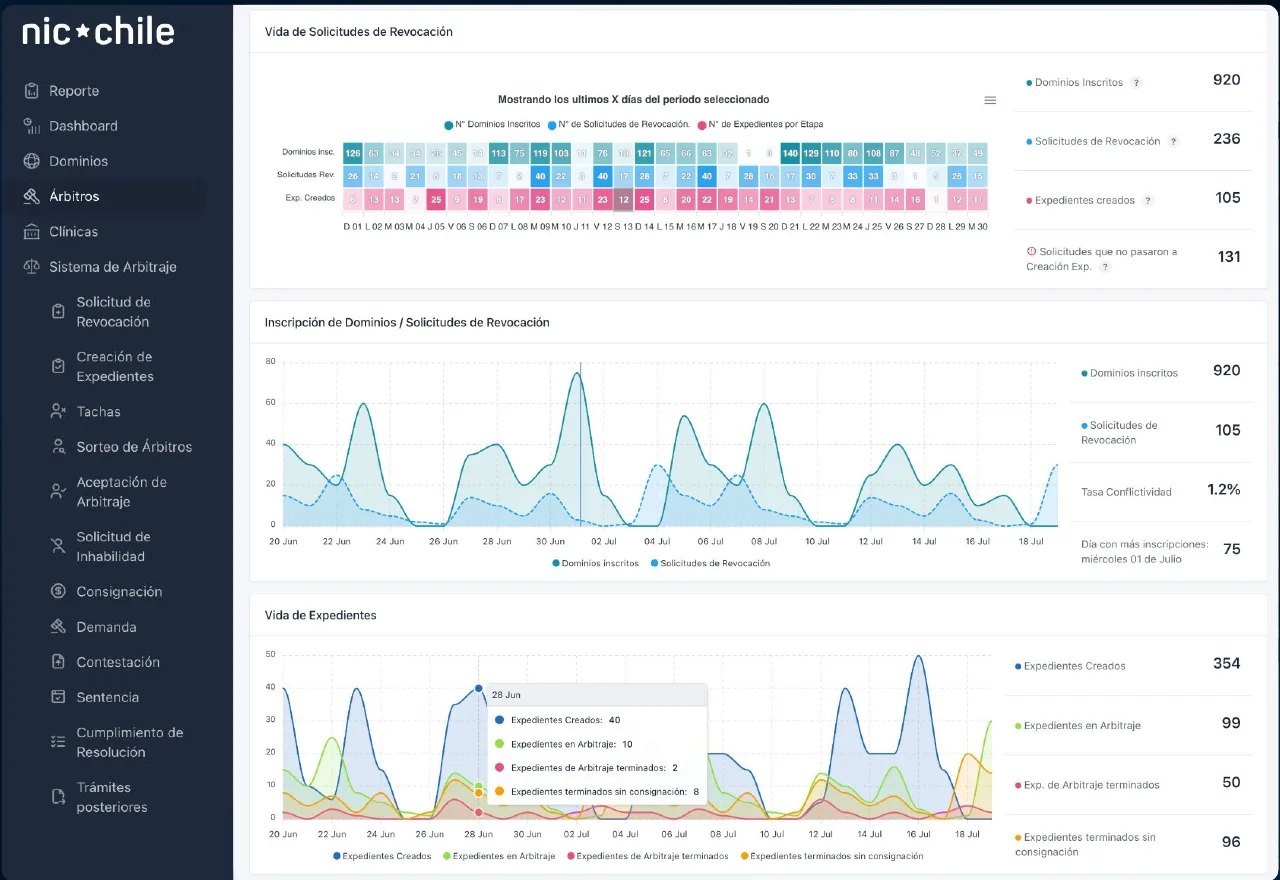
Measured across six sessions observing coordinators answer real questions before and after launch, in their own workspace.
per question, across 4 systems and several spreadsheets. Longer when the data had to be requested from another team.
to find a key indicator, in one view.
Period comparisons now go to the board and external stakeholders.
Coordinators saw why legal clinics had started losing more cases.
Performance data informed which arbitrators the center kept.
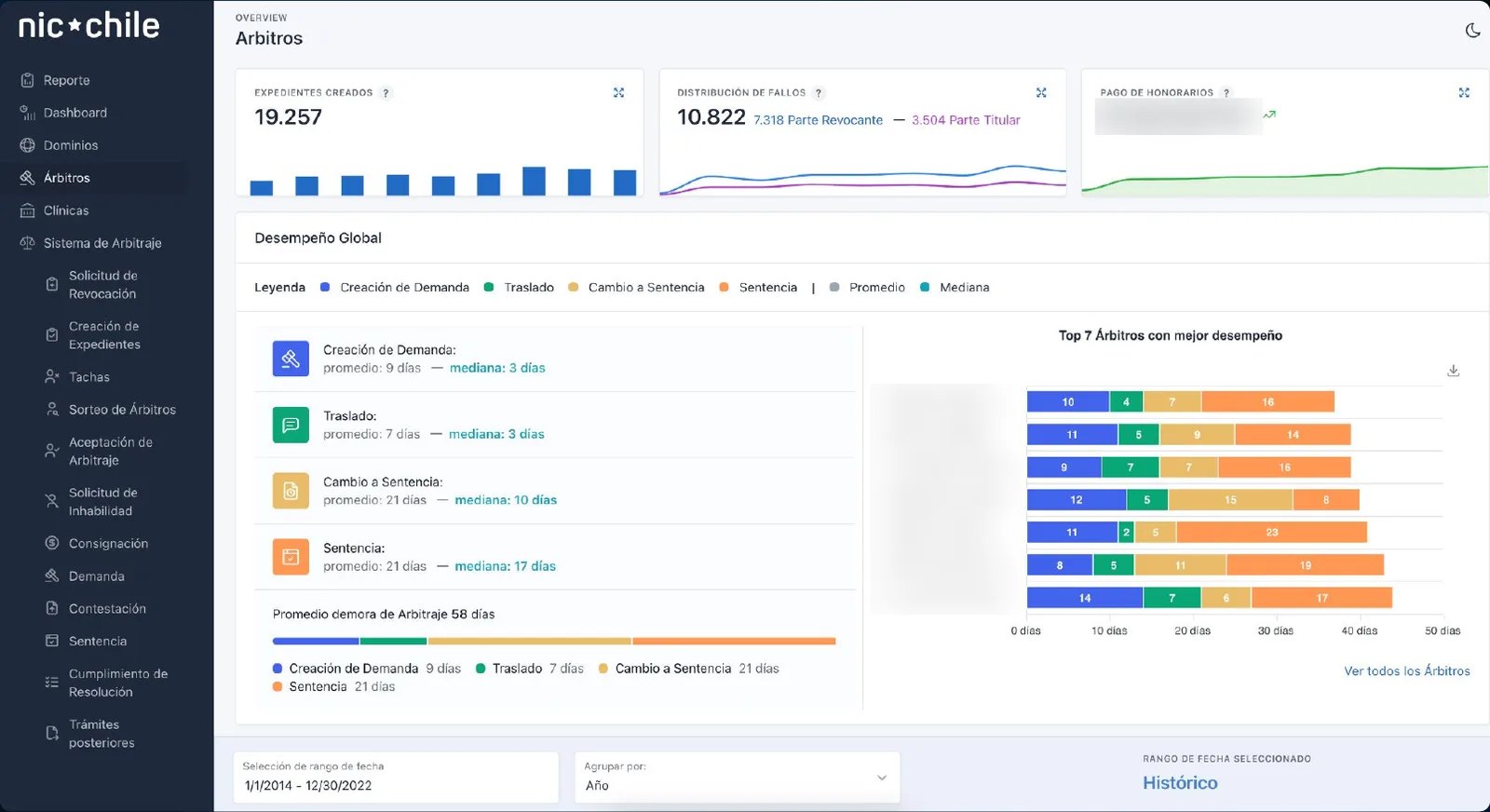
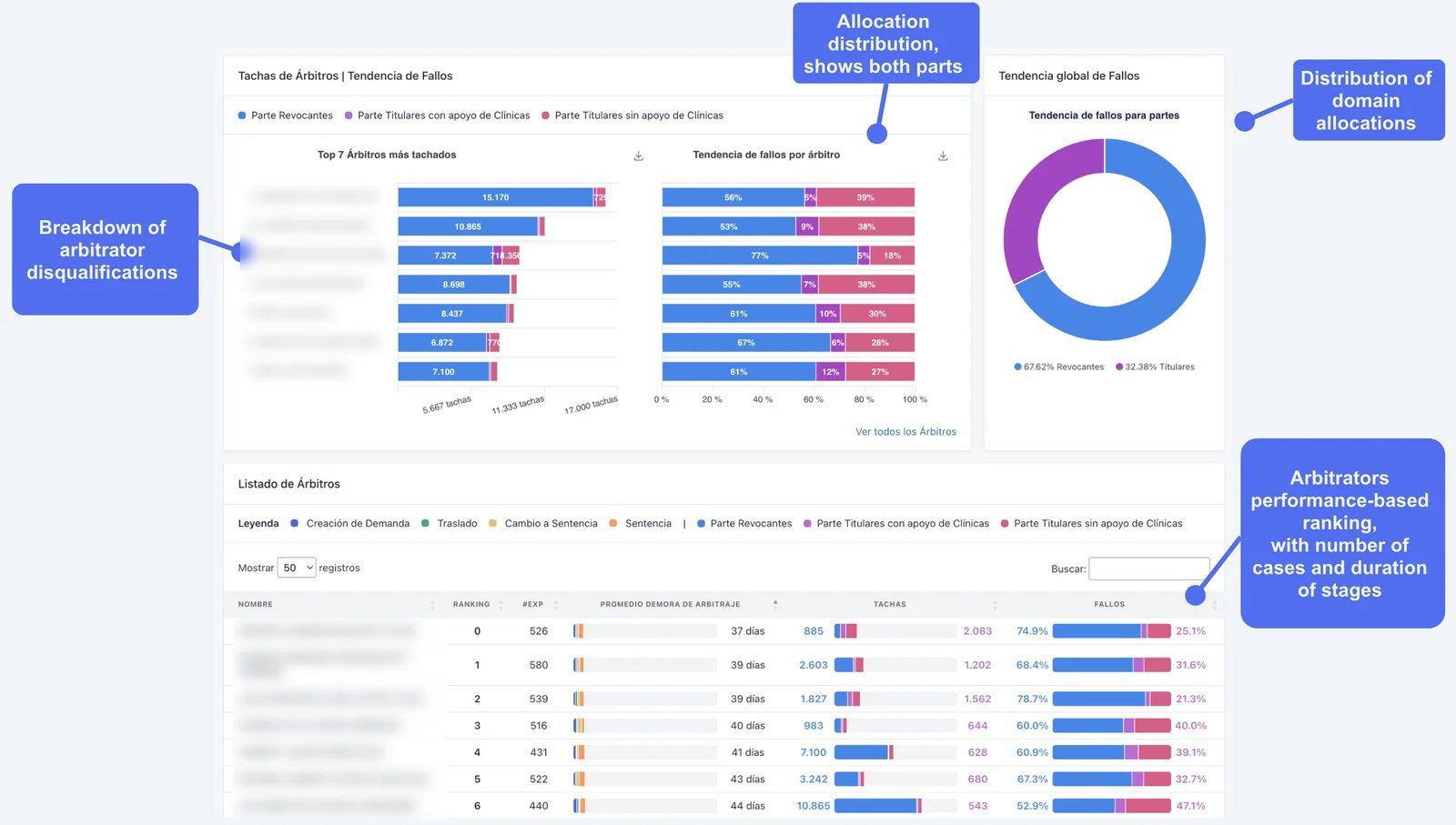
The board's period-comparison report is built on ReCon. Sorting stakeholder questions into historical, comparative and mixed before choosing a chart became how I start every dashboard.
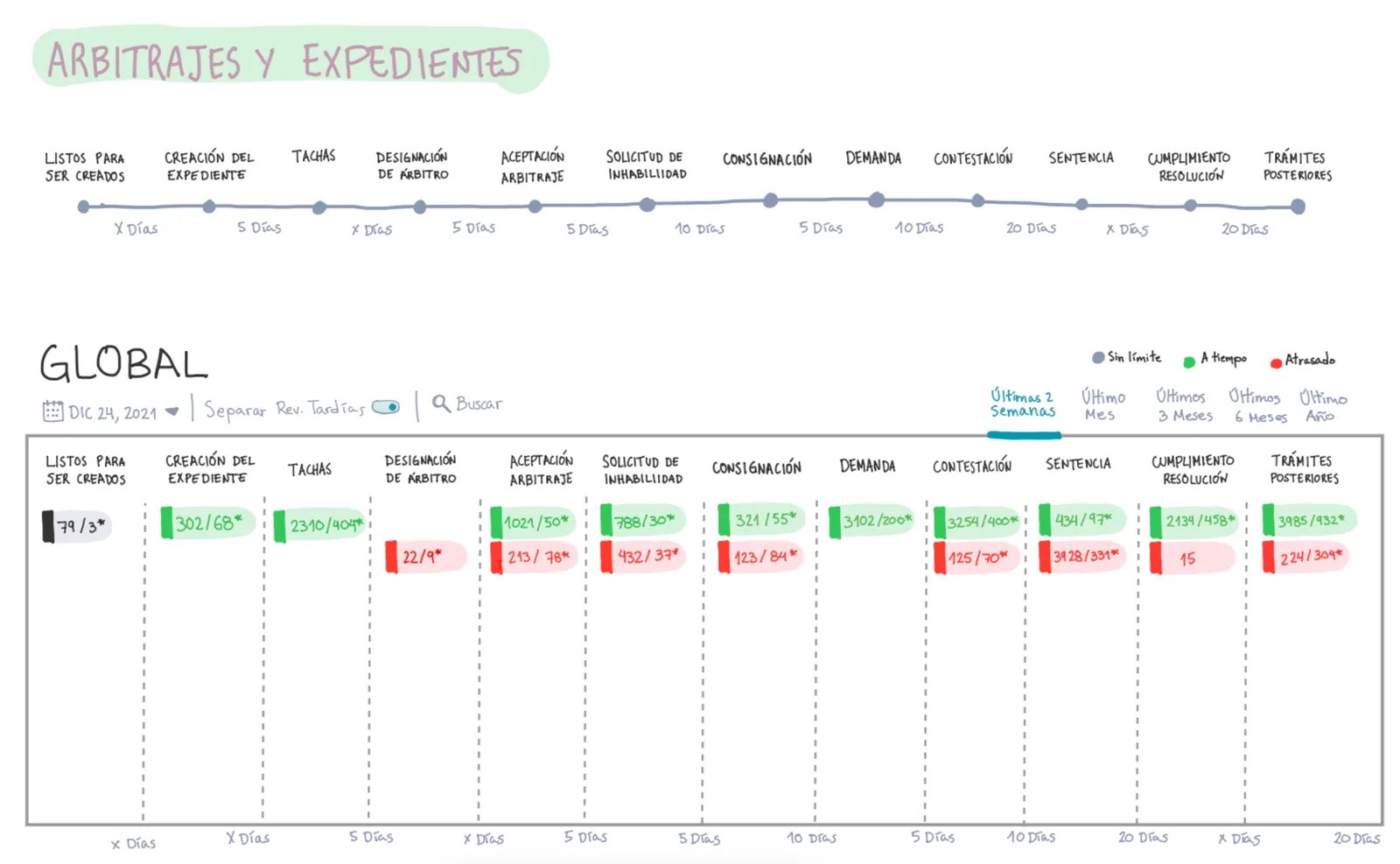
Organizing by the 12 protocol stages gave coordinators a structure they already knew.
Some data edge cases only surfaced once the data was visible. Next time I'd review raw data with coordinators before designing any view.
Work / Cero Accidente
About 50 inspectors had to choose which of 3,905 mines to visit, with records on paper. I designed a ranking that shows its reasons, and the planner inspectors used to act on it. In 2026 I rebuilt it with AI as an interactive prototype you can try.
 SERNAGEOMIN, the national geology and mining service
Designed with the agency's inspection coordinator, a data scientist, a developer and an ontology researcher.
Mining is over 14% of Chile's GDP. SERNAGEOMIN inspects mines to prevent accidents, but with about 50 inspectors for 3,905 mines, every visit has to count. The agency wanted to move from inspecting on a calendar to inspecting by risk.
The stakes were human. Without visibility into which mines were most urgent to visit, a high-risk site could go uninspected, and in mining that gap can mean an accident or a death.
Two things stood in the way: inspection records were on paper, and inspectors are experts. They would not follow a ranking they couldn't question.
What I owned: five sessions with the inspection coordinator and a joined field inspection, the information architecture (the base for data entry and for the model), and every screen of the planner. I worked with a data scientist who built the model, a developer and an ontology researcher.
Four decisions made the ranking usable by experts.
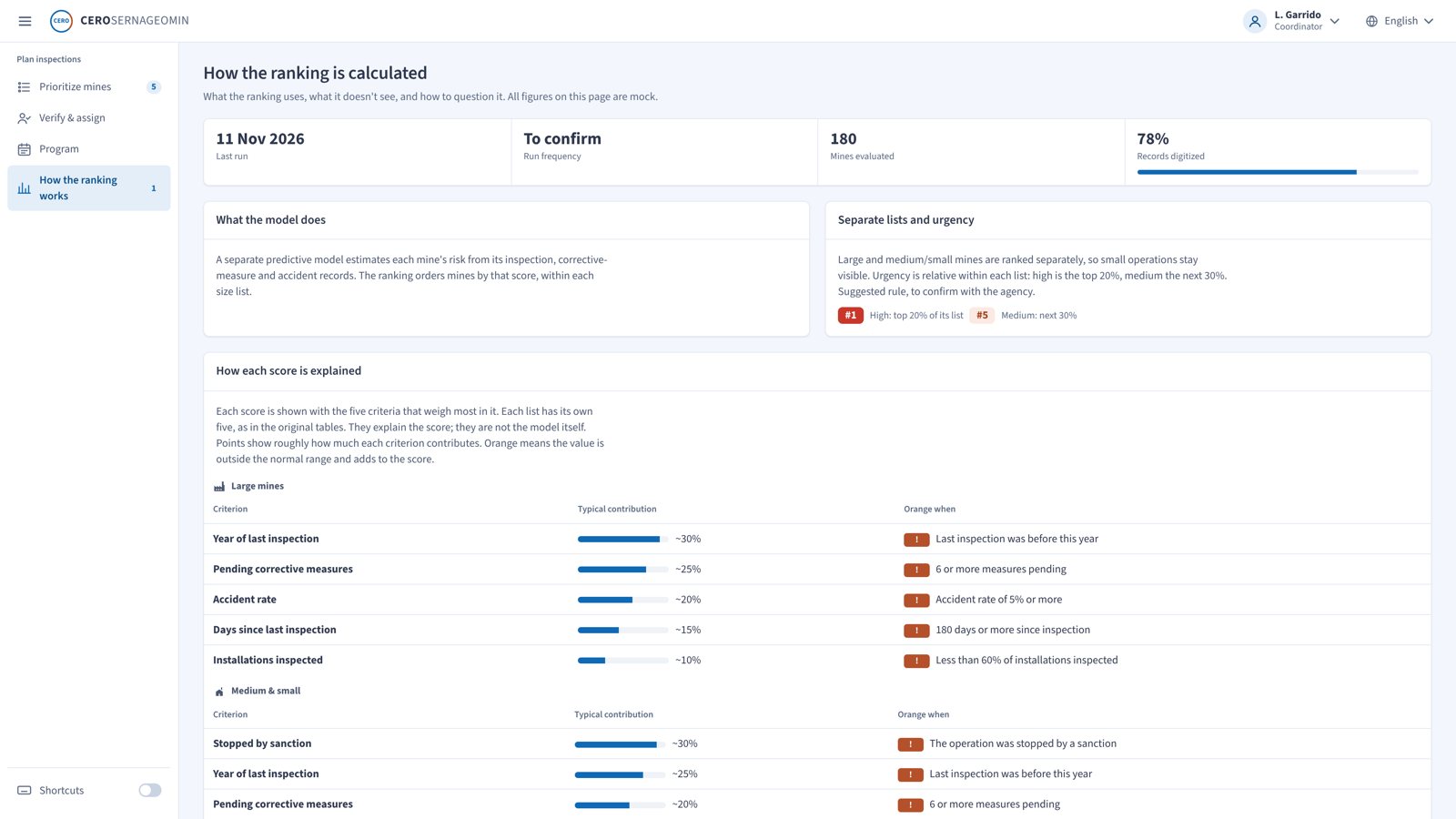
One risk score per mine, or the score broken into five criteria inspectors can see and challenge: time since the last inspection, pending corrective measures, the accident rate, and more. Each list had its own five, as in the agency's own tables.
Inspectors trust their own experience. Seeing the reasons let them check the model against what they knew, instead of being asked to take it on faith.
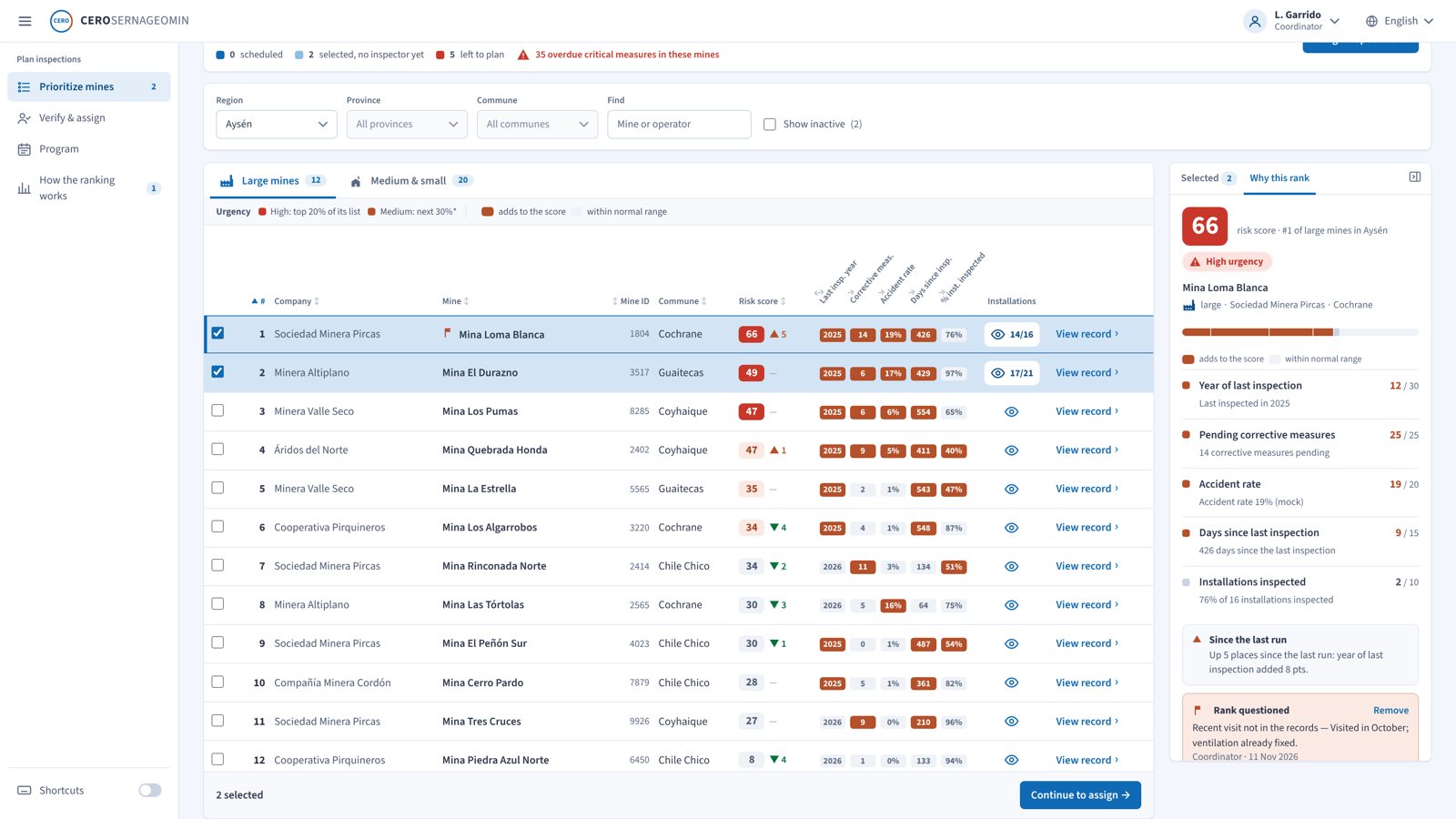
In the 2026 prototype: the five criteria as chips on every row, orange when they add to the score; "Why this rank" opens the breakdown.
One national list, or separate rankings by mine size.
Mixed together, nearly every small mine sinks to the bottom. Separate lists keep small operations visible, where risk is often highest.
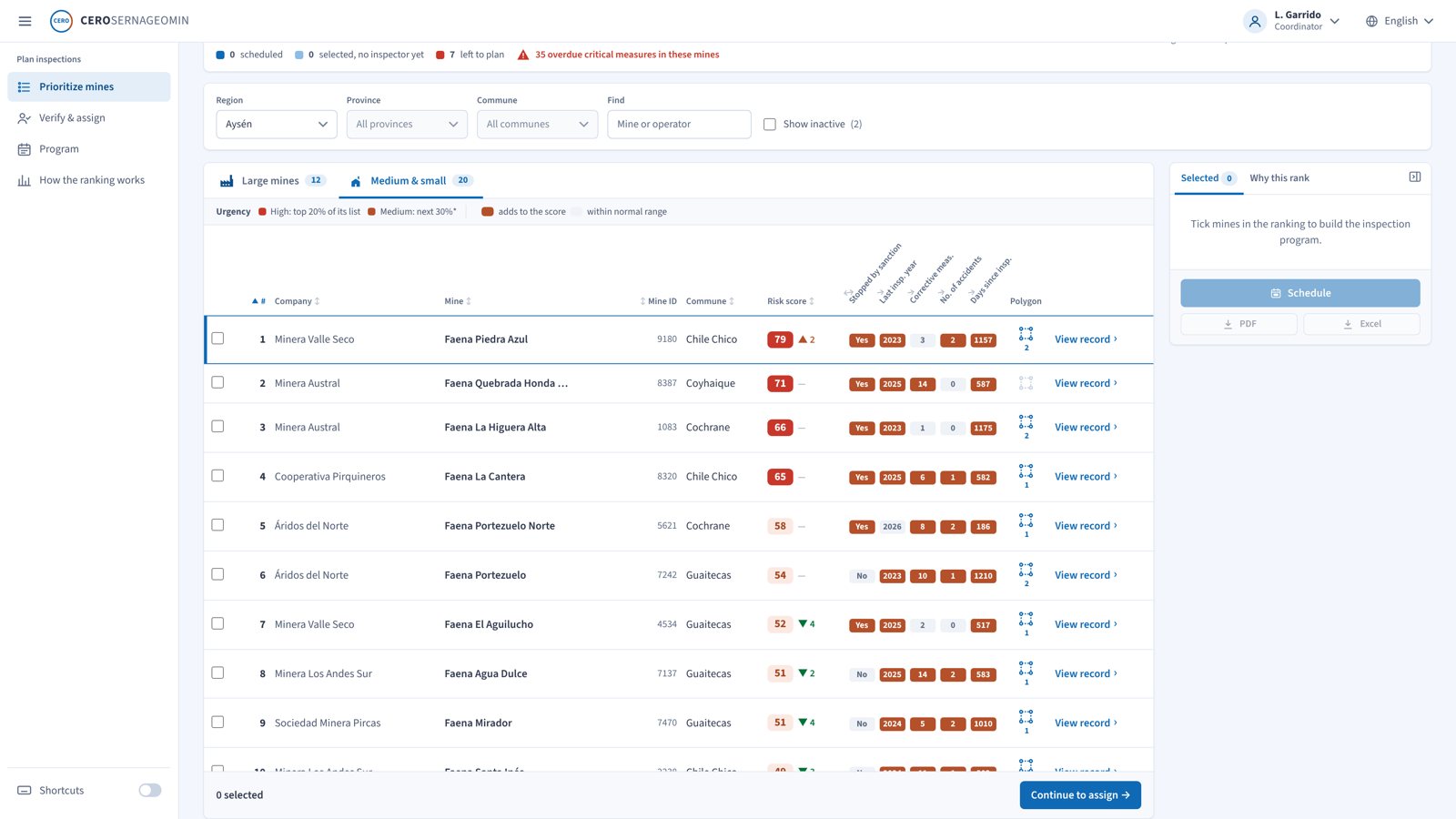
In the 2026 prototype: two tabs, each with its own criteria, plus an urgency level on every score and sorting on any column.
Schedule mines one by one from the ranking, or group them by where they are.
A large mine takes a full inspection day on its own. Medium and small mines close to each other can share one. A prioritization polygon groups them by distance and travel time, so a day on the road covers the riskiest sites nearby.
In the 2026 prototype: the polygon on a terrain map, with travel time, a suggested visit order and the riskiest mine left out of the trip.
The client's draft spread each mine's data across ten tabs; the alternative was one page read top to bottom.
Inspectors do final reviews outside the mine, in poor light. One record they can scan beats tabs they have to remember. The client had drafted the tabs.
In the 2026 prototype: should we visit, and what should the inspector check? Main reasons first, then installations with overdue measures, then a printable visit sheet.
The scheduler became the agency's main inspection planning tool. Inspection volume stayed constant, so the gain came from better targeting, not more visits.
Visits planned on a fixed schedule and inspectors' memory, from paper records.
More mines reached between 2019 and 2021 with about 10,000 inspections a year, the same as before. The ranking scored 2.21 relative NDCG against the experts' 1.00.
SERNAGEOMIN's broader Zero Accident program reported fewer fatalities. I don't attribute that to this tool: the program had many contributing causes.
“…permite mejorar la productividad y focalizar con mayor efectividad la acción preventiva y fiscalizadora” (it lets the agency target prevention and inspection more effectively).
What outlived the project: the information architecture I built with the ontology researcher became the foundation for both data entry and the predictive model.
The original's decisions still hold. This shows the planner working, with what's possible now. A personal project, not an agency release.
None of these were in the 2019 release. They answer what the original research pointed to: field records came back slowly, and experts who can question a rank need somewhere to say why.
Also: keyboard support, text for every colour-coded value, contrast tuned to WCAG AA, colour-blind-safe inspector colours, and English and Spanish throughout. Not yet tested with a real screen reader.
I directed; AI built, in one working session, view by view, with the original screens and research as the reference.
The original screens, research findings and the agency's criteria for each list.
The working prototype, its maps and both languages.
Every design call, checked against the original research. A note never changes the model's score.
Plan a week of inspections in the Aysén region: pick the riskiest mines, group nearby ones into a trip, assign inspectors, then follow one into the field.
Built for desktop. All data is invented: mines, people, scores and weights; terrain and positions are schematic; travel time is estimated. An independent prototype, not affiliated with or endorsed by SERNAGEOMIN.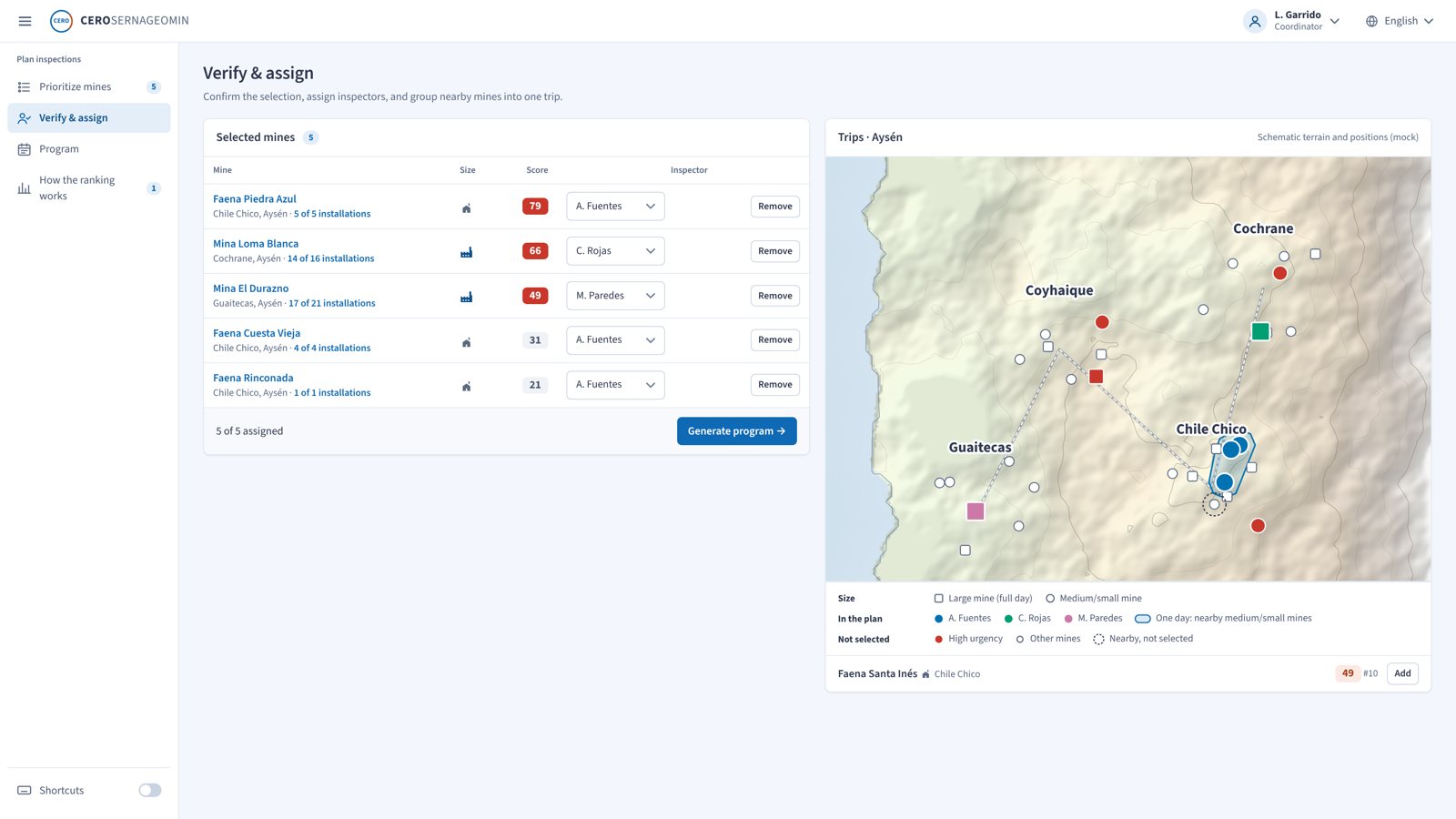
Going down the mine. The lighting, the paper workflow and the travel distances shaped what the planner had to do, and they still shape the 2026 version.
I worked part-time on the original, which left a gap between design and implementation; next time I'd stay closer to the front end. For the prototype, the next step is putting it in front of inspectors.
Work / Helio-KNOW
Heliophysics data, papers and people sit on different platforms and use different vocabularies, so connections get missed. At a Knowledge Graphs hackathon, Harini Muralidharan and I designed a discovery tool for Helio-KNOW, a NASA-funded knowledge network led by Ryan McGranaghan at NASA JPL. In 2026 I built it as a working prototype with AI.
A hackathon project for Helio-KNOW, with Ryan McGranaghan (NASA JPL) as principal investigator. A concept, not a shipped product.
Helio-KNOW organizes space-environment knowledge as a graph: phenomena, regions, instruments, datasets, papers and people, with the relationships between them made explicit. Its focus is how energy from the solar wind reaches Earth's upper atmosphere.
The stakes are scientific. When data, papers and people live on separate platforms, under different names for the same phenomenon, a scientist can miss the observation that would confirm or challenge their model.
UX design and project management, shared with Harini Muralidharan, with Ryan McGranaghan as principal investigator and the person we designed for. We framed the problem, designed the discovery flow, and delivered a pitch deck and a Figma prototype.
A discovery interface on the knowledge graph, which shows results as a network, by physical location or as a table. Scientists can import their own model and map it onto the ontology, which the project calls semantic lifting.
Scientists arrive with different questions: a phenomenon, a paper, a person. Science, Publications and Researchers discovery are three entry points into one knowledge graph, instead of three separate tools.
The core screen puts "Your model" beside "Identified conjunctions": the moments when two spacecraft or radars observed the same region. A scientist sees at a glance where real observations can confirm or challenge a simulation.
Each finding opens a details window with three parts: Details (what was observed, by which instrument, when), Co-location (where and when the observations overlap) and Metrics (the measured values, with flags and comments).
The prototype follows a scientist verifying a simulation of how the magnetosphere and ionosphere interact.
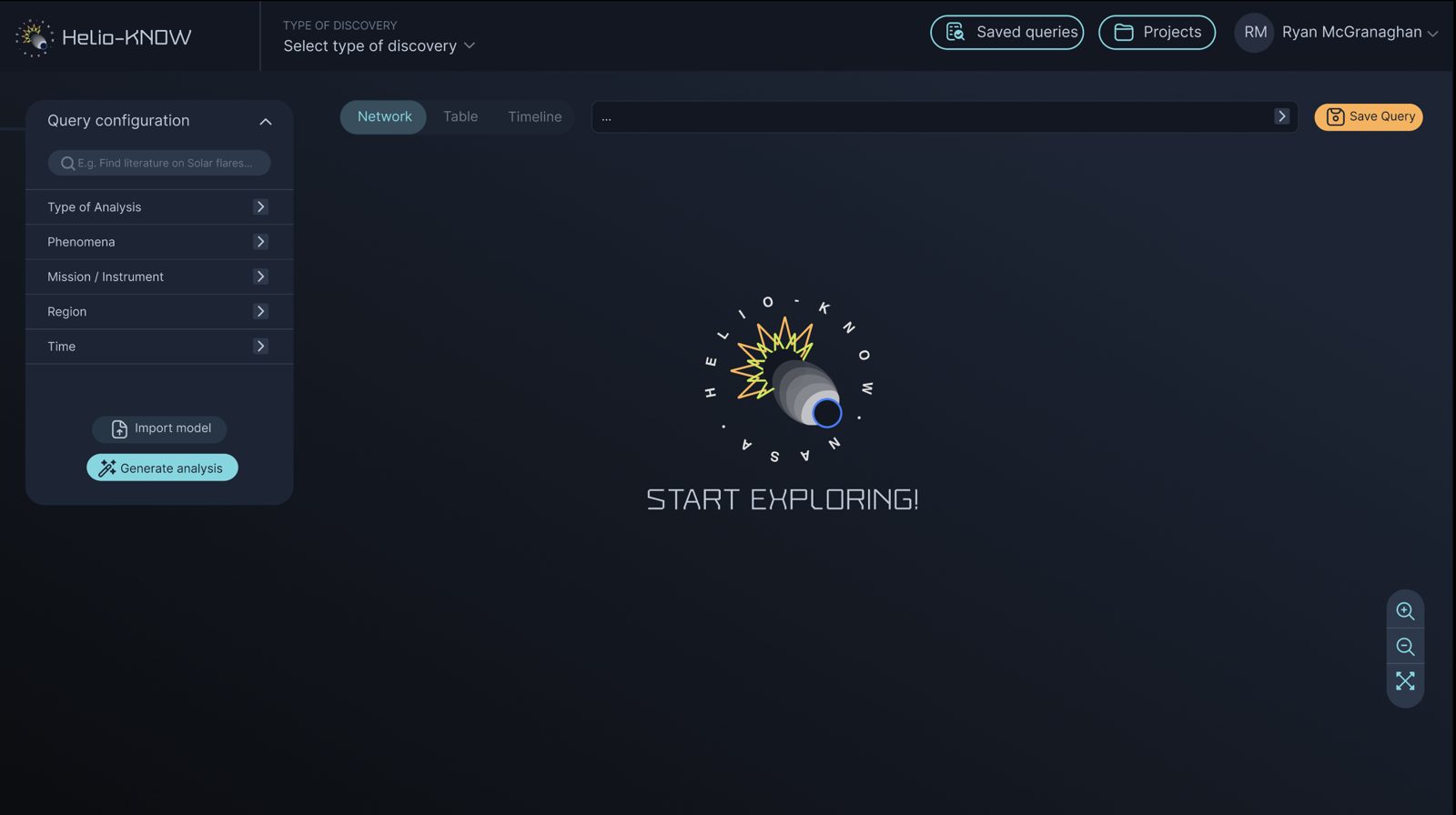
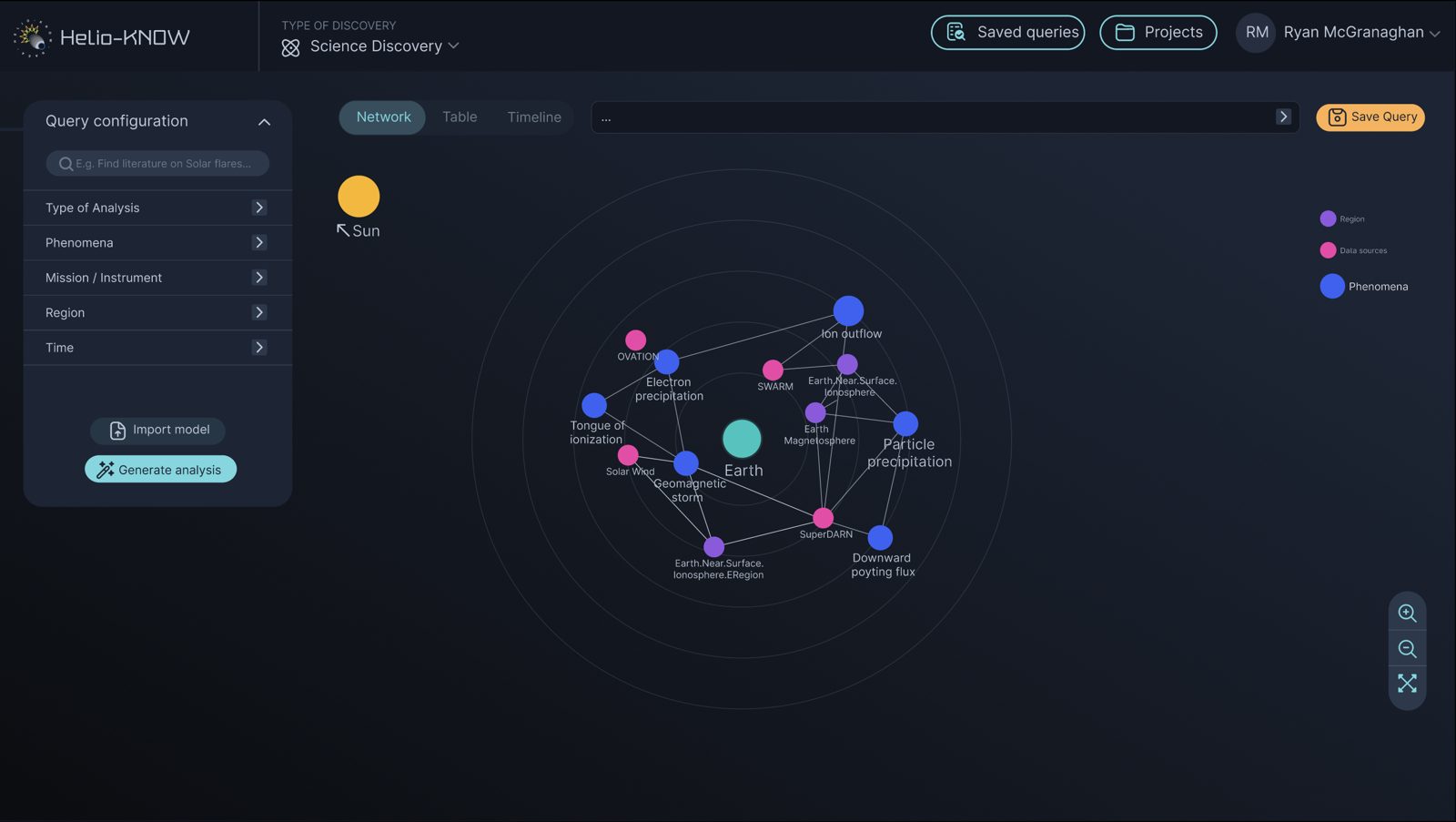
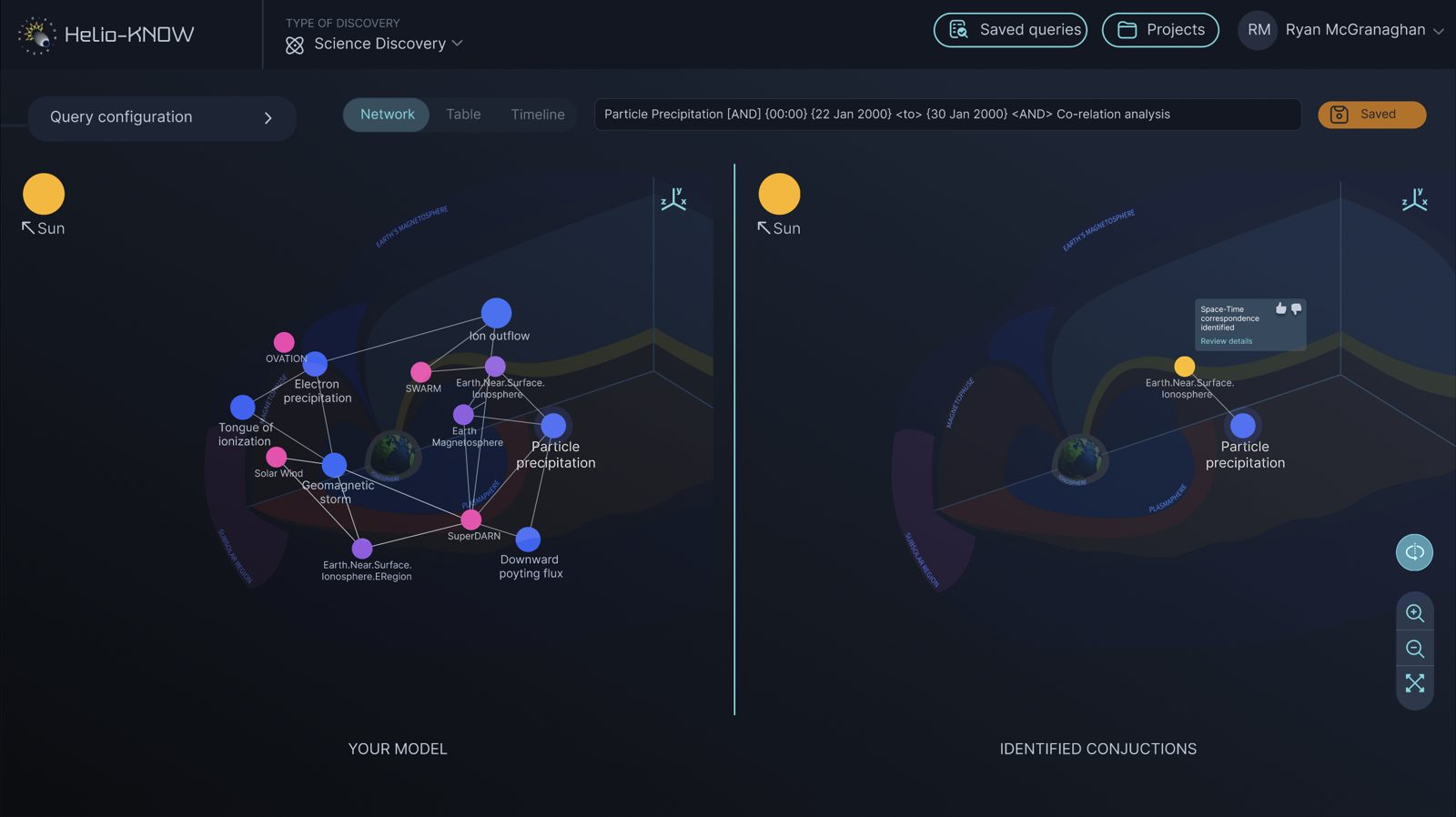
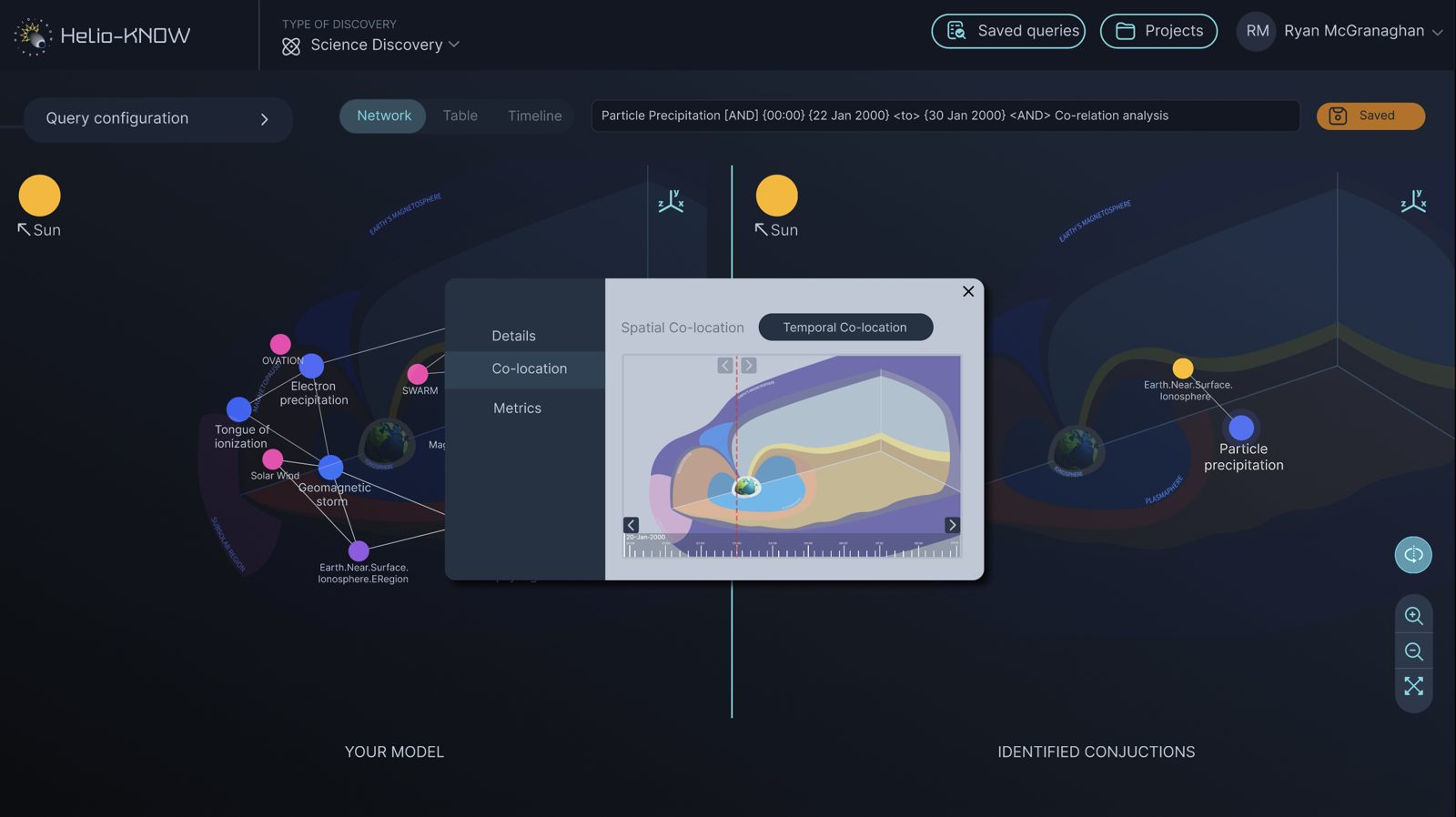
The Figma prototype showed the flow. This version works: real geometry, real computation and the project's real content. A personal project, not a NASA release.
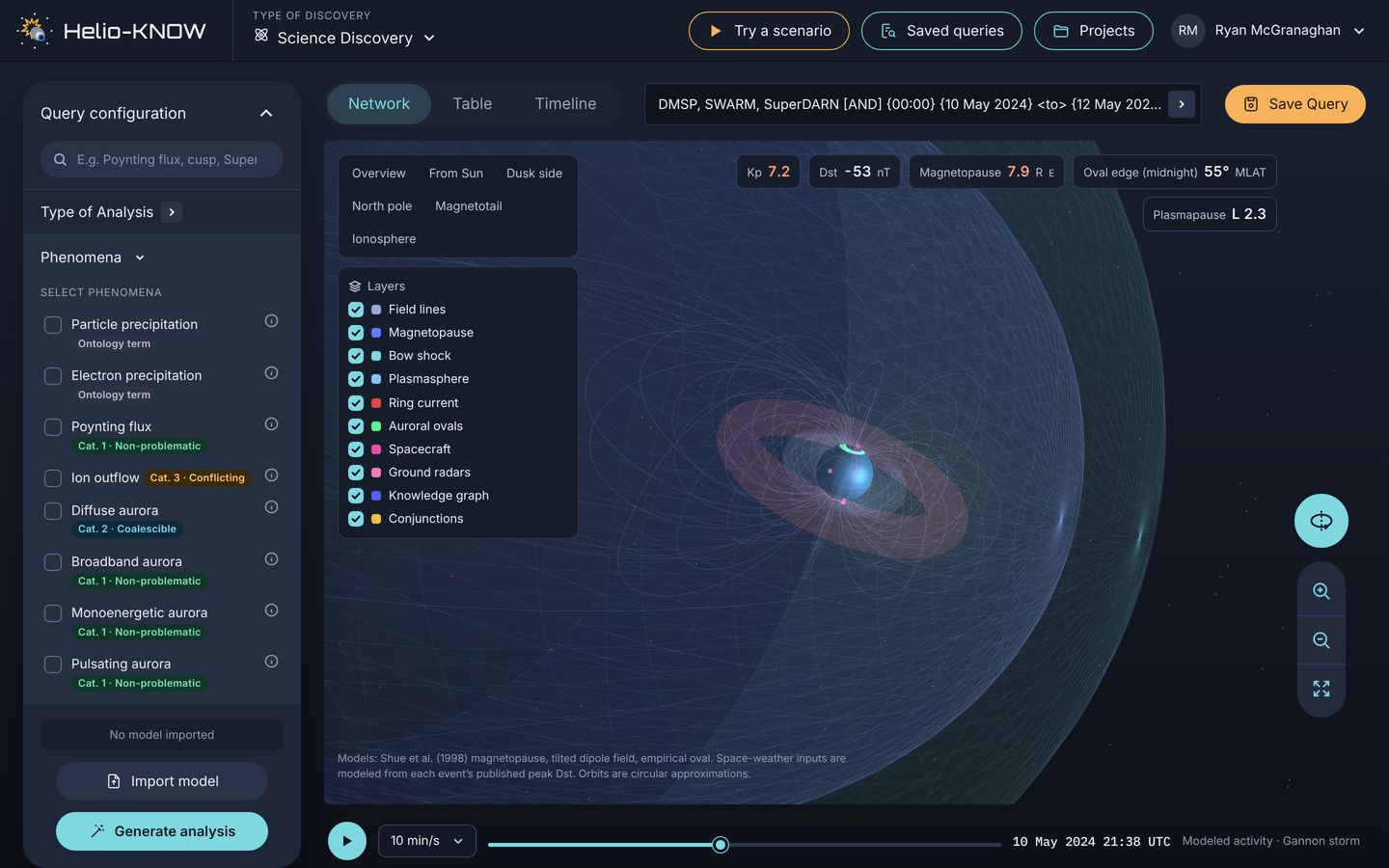
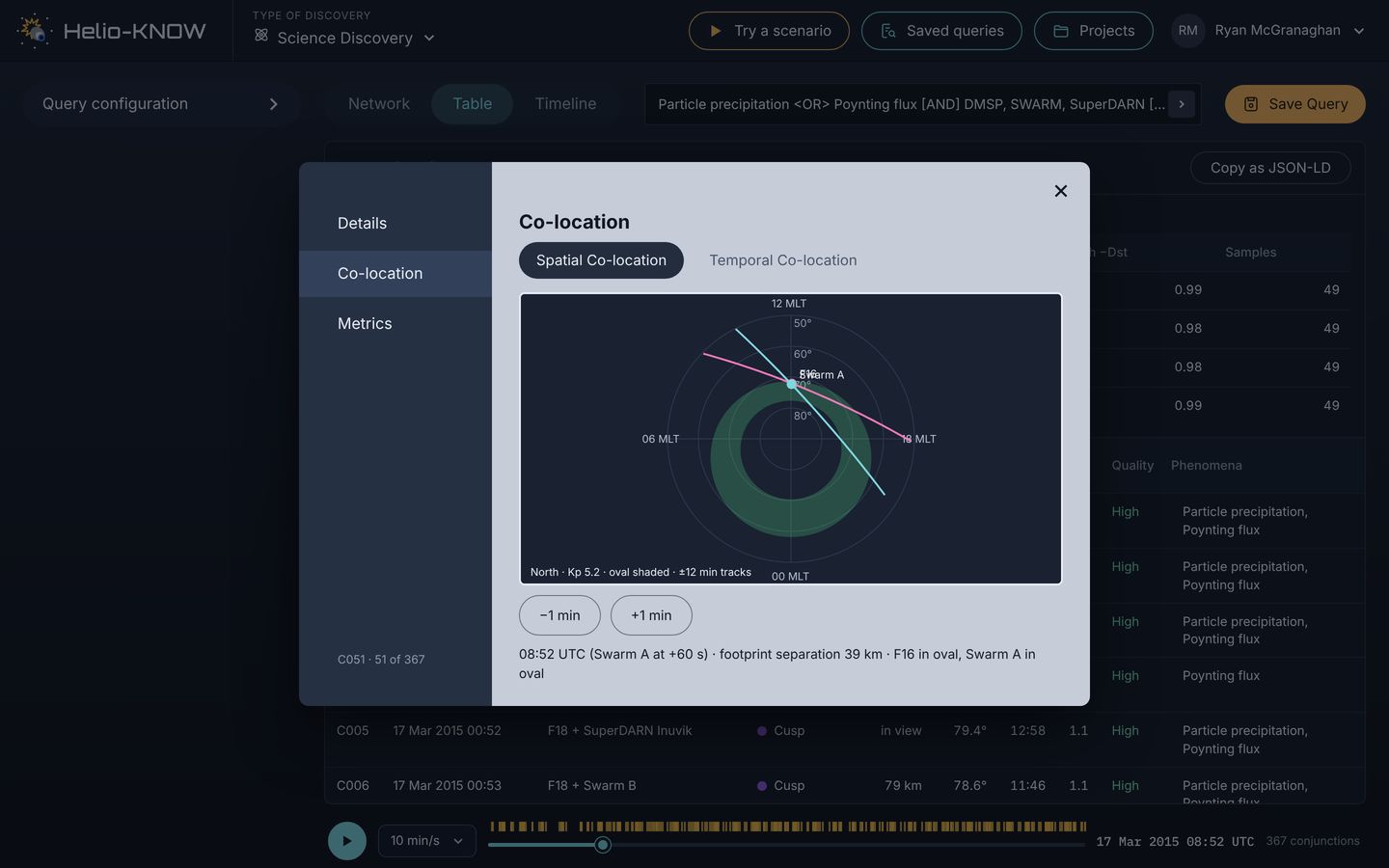
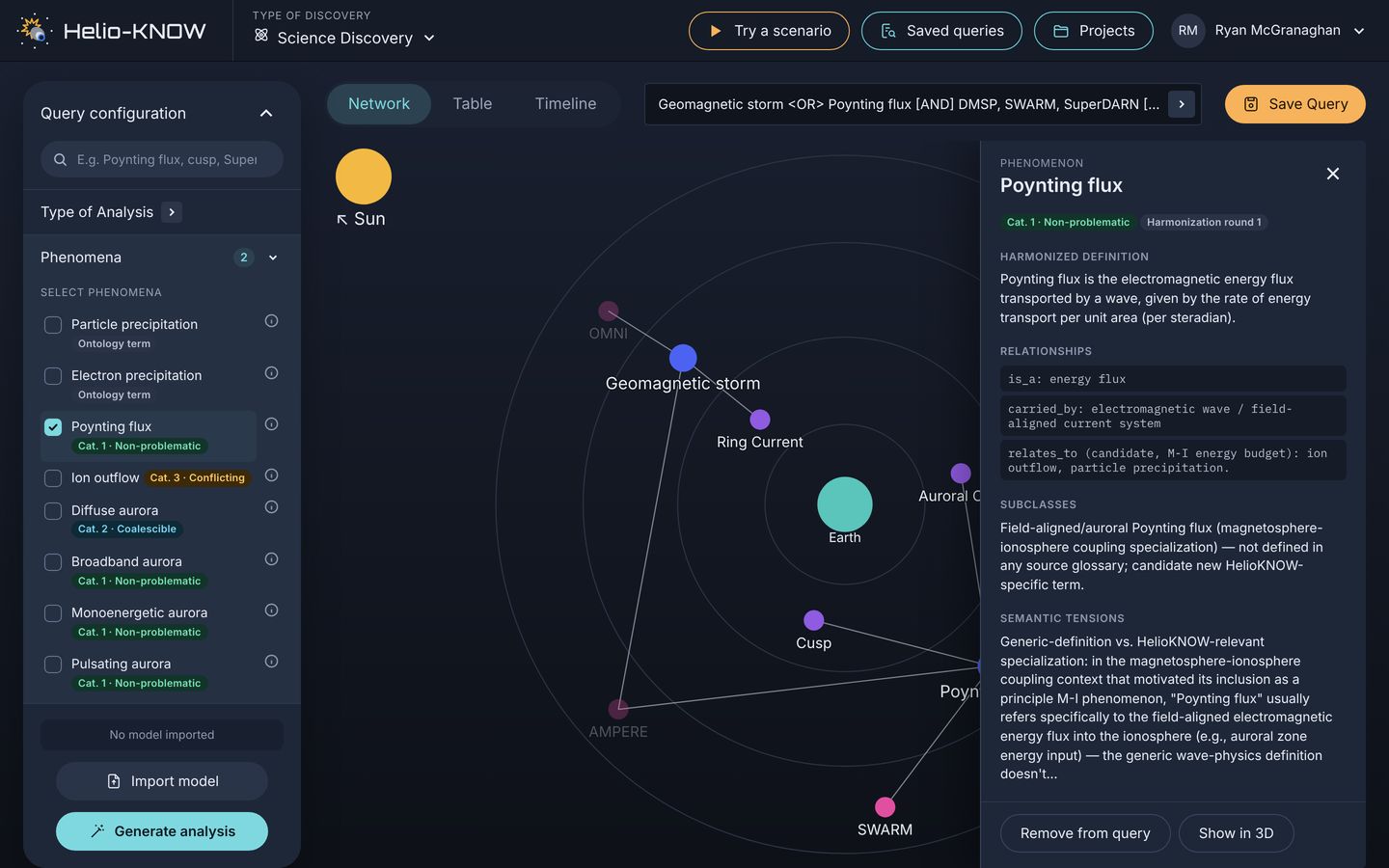
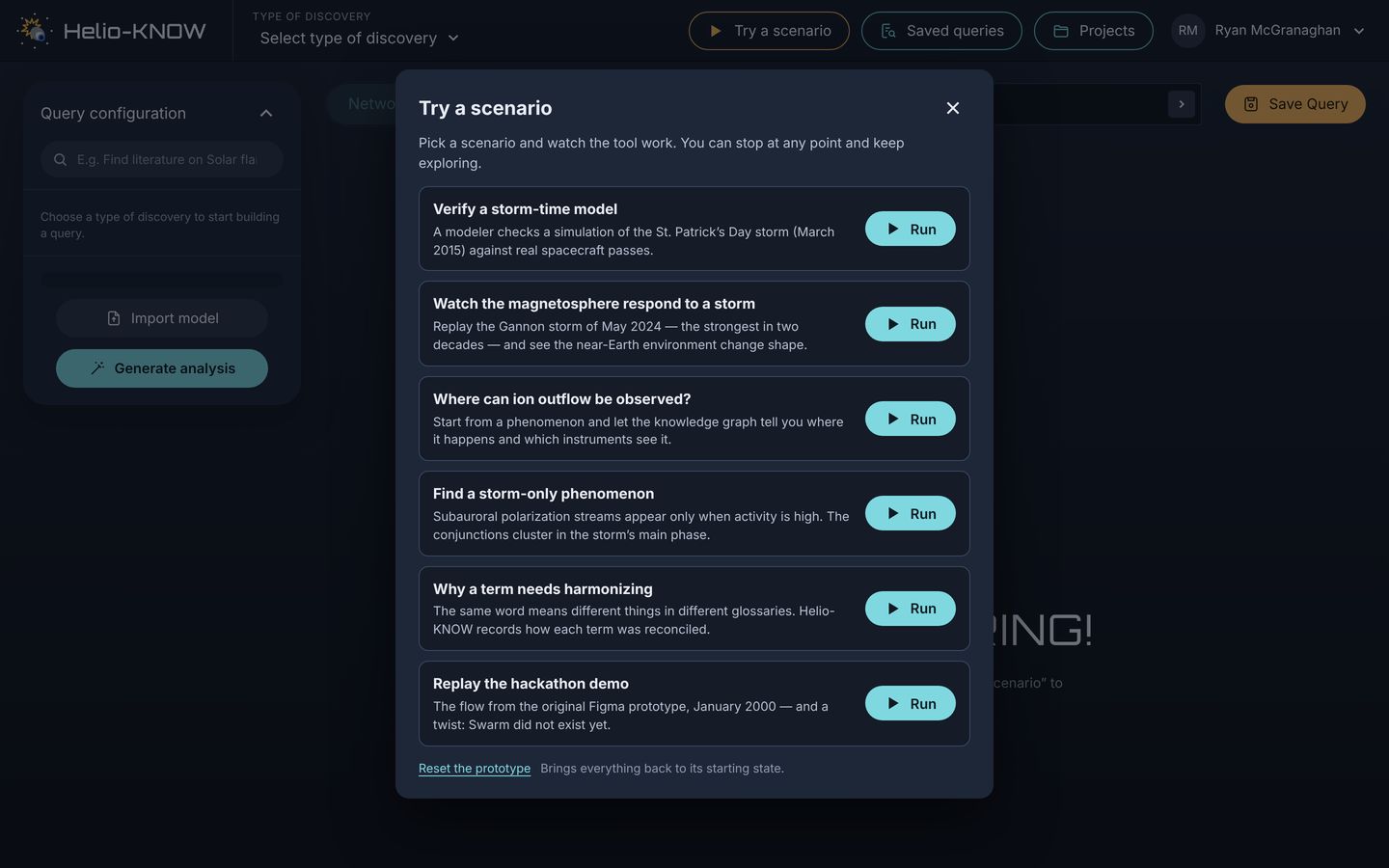
Also: model import from a CSV with columns mapped onto ontology concepts, a timeline, threshold alerts, saved queries, export as linked data (JSON-LD), and Publications and Researchers modes built from real papers and talks about the project.
Definitions, harmonization categories, relationships and source glossaries from the project's glossary; region names from its taxonomy; the missions and the dates they operated; the papers and talks.
Storm activity is a simplified curve scaled to each storm's published strength. Satellite orbits are approximations. The app says so on screen.
No real data archives are queried. Conjunctions are illustrative, not results to publish.
I directed; AI built. I started with a research summary of the project and a rebuild of our Figma screens, then built the working app on top of them.
Our original design, the project's glossary and region taxonomy, and its papers and talks.
The 3D scene, the orbit and conjunction calculations, model import and the scenarios.
The flow, what counts as real, and labelling everything modeled on screen.
Replay the May 2024 storm and watch the magnetosphere change shape, or verify a storm-time model against spacecraft passes.
Built for desktop. Storm activity and orbits are modeled. An independent prototype, not affiliated with or endorsed by NASA or JPL.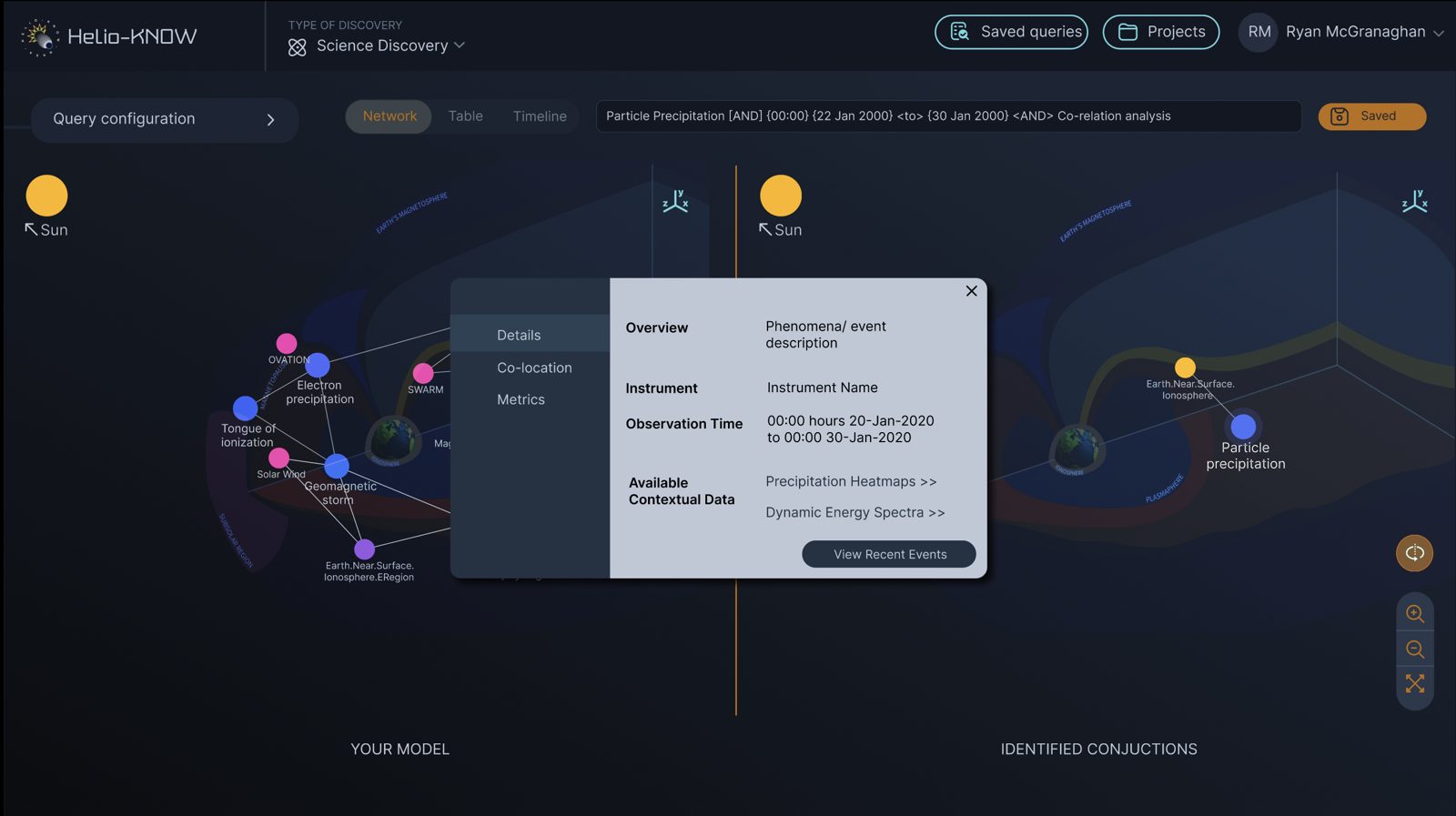
Telescope operators, transit controllers, arbitrators, mine inspectors and network engineers. Their tools hold more data than anyone can read, and a wrong call costs a night of observation, a delayed bus fleet or a missed inspection.
I learn each field well enough to speak its language, design with the engineers who build the tool, and prototype in code when a decision depends on real data.
Set up how design, engineering and research work together in a tech-transfer center: researchers in discovery, developers as active participants in design sessions, standardized development cycles.
Making the case with evidence: side-by-side examples that turned operators from terminal views to visualizations, and a single scannable chart that replaced a client's tabbed draft.
The per-component method I built for L.O.V.E. was adopted by the designer who took over, and scaled to the components that followed.
AC3E (GESTIN management platform and website), Helio-KNOW, a NASA-funded research project (hackathon concept, presented at KGC 2024), LACTLD performance reports, an agricultural risk platform.
Led ReCon, the arbitration performance tool for .cl domain disputes. Managed two interns; ran exploratory workshops for a DNS performance platform.
L.O.V.E. for Rubin Observatory, ALMA's alarm system, Cero Accidente for SERNAGEOMIN, Santiago's bus control room. Hired two designers; set up how design, engineering and research work together.
Visualization and real-time interaction for 3D virtual sets.
UI, UX and front end for Adkintun, a mobile internet quality platform.
Digital and Multimedia Communication, Universidad del Pacífico, 2014
HCI residency, Inria Saclay (2016 to 2020); ACM HCI/CSCW school, Brazil (2019); Information visualization, NYU (2026)
Spanish (native), English (fluent, C1), French (B1)
It's only as good as the brief, so most of my effort goes into the research, structure and specs I give it, and into checking what comes back.
Research questions, where it sits in the information architecture, design system fidelity (tokens, components, states), and reality: real data shapes, accessibility and truthful copy.
Talking to users, interpreting what they say, and deciding what matters.
See it in practice: the L.O.V.E. redesign, a working control-room prototype and design system I directed over 21 rounds.
Read how it was builtOne page view of my experience. Case studies have the detail.
Lead Product Designer
Product designer with 13 years designing tools for expert operators: observatory control rooms, transit crisis rooms, mine safety and legal arbitration. I learn each field's language, design with the engineers who build the tool, and prototype in code when a decision depends on real data. My work turns overwhelming data into clear decisions, and it tends to outlast my time on the project.
2023 to now
Alongside NIC Chile until 2025.
2021 to 2025
2015 to 2021
2015
2013 to 2015
Product design for data-heavy tools, information architecture, data visualization, design systems, field research with experts, prototyping in code (HTML, CSS, JavaScript), AI-assisted prototyping and building.
Tools: Figma, Illustrator, Photoshop, Claude, Hotjar
Digital and Multimedia Communication, Universidad del Pacífico, 2014
HCI residency, Inria Saclay, 2016 to 2020
ACM HCI/CSCW school, Brazil, 2019
Information visualization, NYU, 2026
Spanish (native), English (fluent, C1), French (B1)